
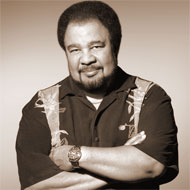
(George originally wrote the following opinion piece back in February of '07 and received dozens of responses; many of which are posted here. It has recently found new life and has spurred another round of debate for '08. Read on for yet more talk on the topic of jazz and whether it has lost its roots.)


AN OBSERVATION

OK, I have something I want to talk about.

Over the past five or six years, I’ve noticed a marked change of direction in many young jazz pianists. Please keep in mind that for the purposes of this article, I’m only referring to jazz pianists, but in many ways it includes other instruments as well.

I guess the place for me to begin is to define the word “jazz” – well, I’m not going to tackle that one just yet.

You see, there seems to be a moving away from swing and spontaneous improvisation. I recently spoke with Billy Childs about the issue and he feels, as I do, that it is a musical movement of players leaning towards European elements and not traditional African American elements.

It seems that the feeling of the blues has been diminished and many of these young players in reality sound more like classical players. In listening to various solo piano performances, this is quite apparent.

Now don’t get me wrong, I LOVE classical music. But when it comes to jazz, it seems to me that somewhere in a performance one needs to acknowledge its’ heritage either directly or indirectly.

Now jazz at its’ core is a brothel music, it was born in the whore houses of New Orleans. The music was upbeat, fun, danceable and at the same time technically challenging, but most importantly it was born of a free spirit!

Now this is important, because many young jazz pianists sound like they have rehearsed everything down to the last sixteenth note. And even if they haven’t, it feels that way. Most of the playing I’ve heard is virtually mistake free.

But something is missing! I have to look hard to find that free expression of emotion, living on a tight rope, experimenting, trying difficult passages and maybe not totally executing it correctly but making the attempt.

I’ve always felt that Miles Davis’ blown notes were part of his musical canvas. If he played all the notes spot on, would his music have felt the same – I doubt it!

And if that’s true, then perfection must be overrated, at least as far as jazz is concerned.

Yeah I know, I can hear it now – “the pursuit of perfection is a noble quest for any artist.” That’s true - but when technique becomes more important than telling a musical story or surfing the wave of spontaneous thought, then I believe it is a misguided quest.

Technique is and always will be a means to an end and not an end in itself! Technique is important in allowing an artist to more easily express ideas, giving flexibility of thought and the freedom to execute more difficult and complex passages. BUT THE TECHNIQUE IS NOT THE MUSIC!

So, it’s a long way to come from playing in an early, raw New Orleans environment to Carnegie Hall - and jazz being recognized in that way is a great achievement. But back in the day, even at Carnegie Hall, the players did not forget where they came from and were not afraid to keep it real and pay respect to the blues.

Now I’m not saying that this trend towards Europeanism (is that a word?) is necessarily wrong, I’m just making an observation and wondering why?

I realize that trends in jazz will change - that’s the essence of what jazz is, and change and inclusion are what a creative musician uses to create an environment. But why the move away from traditional African American musical values?

Now at times I’ve heard some of these players play the blues, and it’s quite apparent that they don’t have a clue how to do it. The blues is a feeling and attitude. In my playing it is at the core of everything I do, so when young players abandon that, it’s almost like they are abandoning a large part of what I love about jazz.

I guess it’s where I personally would like to see the music go or not go. To move more towards European Classical elements, while a noble endeavor, leaves me feeling that jazz may go the way of Classical music and only be heard in symphony halls or used as elevator music or melodies in pop tracks or only heard and loved by a small group of admirers.

The blues at its’ best (like gospel) is raw and free, and mad technical expertise has little to do with it! On the other hand there is nothing I love more than a beautiful melody played very eloquently, but somewhere that rawness, or as Quincy Jones calls it – those grits (that hot sauce – that bacon grease) - have to make an appearance on the stove.

This year I toured mostly with Stanley Clarke. Every night we ended the show with a blues. The blues is important! Along with its’ counterparts work songs, gospel and spirituals, the blues is what got black people through a horrific time in history.

You know maybe that’s it. Even though I didn’t experience slavery, my mom and dad did, so I had that direct connection to the gut feeling of the blues and its’ musical predecessors – in reality it is a direct connection to the past through a musical tradition. For me, that feeling tells the story and displays the soul of my people.

On the other hand, I don’t believe one necessarily needs to personally experience the American black scenario in order to enjoy, understand or play the blues! One just needs the interest, gift and effort put forth to learn what makes it work. I’ve seen BB King play in Europe to an all white audience and believe me, they eat it up! I’ve also seen white players from Holland play the bottom out of a blues. There is a huge audience for the blues in Europe – now did they experience slavery?

I guess what I’m saying is I’m feeling a historical disconnect between these new crop of young jazz players and their predecessors. Maybe I’m just getting old and beginning to sound like the older musicians I encountered when I was a pup.

But still in the end, it’s up to the individual jazz musician - there just doesn’t seem to be the interest in that type of feeling anymore or they would learn how to play it and include it in their arsenal. Maybe they feel that it is too simplistic or commercial. But to the contrary, that tradition is FAR from commercial, in fact it is the exact opposite.

What makes and made jazz was the combination of African American and European elements. To me the music works best when it contains both. In affect it is integration. When the elements are segregated, neither work as well under the umbrella and definition of Jazz.

So now, what is Jazz?
Stanley Clarke and I had a talk about this. As Stanley sees it, jazz is an undefined term. It was fairly definable early on, but has since become whatever the musician, listener, concert or radio programmer defines it to be.

I personally subscribe to the Duke Ellington philosophy, “It Don’t Mean A Thing If It Ain’t Got That Swing.” As far reaching as Duke’s music was, he loved the blues and understood its’ importance to jazz. Keep in mind that when I say “the blues” I’m not referring to a song form, I’m referring to a long succession of musical feelings and ideas dating back to Africa.

So again, what is Jazz – I know what it ain’t!
I do know that jazz is an attitude that has the blues at its’ core. It is at it’s best mostly spontaneous. That is what separates it from other music. Jazz musicians are spontaneous composers versed in the art of theme and variations, counterpoint wizards, rhythmic voodoo doctors, melodic swans, harmonic oceans, creating what has yet to be created, constantly searching, assimilating and birthing a new music child.

So, in the end whether these young players are really playing jazz based on this definition is debatable. Whether they are good players is undeniable. Whether it matters is also a point for discussion.

Now I’ve been accused many times of not playing jazz and that’s probably true from a narrow traditional standpoint - I’ve been dismissed as a player by many major jazz publications and critics for this very thing. However, compared to these new breed of “classical/jazz” players, I don’t know about that!

Whether I play straight ahead, funk, r&b, latin, pop or gospel – styles are irrelevant - the majority of my music has jazz elements - spontaneous, mostly improvised, and has the blues and gospel at its’ core. On that level, I’m more of a jazz player than many I hear today!

In case you think I’m being too hard on these guys, let me tell you that I’ve heard some incredible young jazz pianists who really know how to play and are doing it, what I feel, is the right way.

And I’m not trying to control jazz, the mere idea is a ridiculous notion. Jazz was born of a free mind and hopefully will remain that way!

And in the end that is my main concern – keeping the freedom in the music!! The real musician needs to be free to create what needs creating.

I could care less what this critic or that critic says, what this publication or that publication says. Though I believe that many want to, they don’t control the music, the musician does!

There are too many non-musicians deciding what musicians should do. In a nutshell that’s what’s wrong with the business! And even worse, these musicians are listening to these folk.

In many ways, I think this is what’s happened to many of these young pianists - they’ve been influenced by non-musicians. Now it’s OK for these business people to offer an opinion, but it seems to me, especially in jazz, that the musician must be given the final right of refusal.

But, as fate would have it, the musician has given up too much power and as result there is too much music being made today that is contrived and totally controlled. The internet has become a great equalizer in this fight.

It’s wonderful to have a medium that cherishes musical freedom. That is what I always loved about jazz and what I don’t want to see lost in its’ evolution.

As I said before, style of music is irrelevant! The important message is the freedom of creativity and thought. Building on what came before and taking that idea to new levels. That’s the only way the music will truly evolve and become an extension of what came before.

Yeah, I know this is a wide open subject with a lot of opinions on all sides. I just thought I would put it out there—what do you think?


The Duke.

Whassup man?

I was listening to some of the stuff you did with the George Duke/Billy Cobham band and that stuff is tight. The live version of that concert (with hip pockets, ivory tattoo, red baron etc) is even better. I just love the groove you guys have and not many musicians have that today…that’s why I listen mostly to the ’70 & ’80 music, jazz, fusion etc..

Stevie Wonder is another genious…musical talent and groove master. I like your experimentation you did with the ‘Space Lady’ and that fast attack/decay Mini lead sound..its one of your signatures man…hits the spot every time with those pitch up/down changes.

I do have to say im a ‘fan’ if you can say it that way, of your music and your talent. By talent I mean the groove and the funk, the cut that you bring to music. Don’t know about your new stuff but im sure that’s great as well. I read about your NAMM Rhodes thing and I think there is no one better for the job…you do know how to make that thing bark and bite (east bay).

Having said all this what I read in your article about jazz and ‘feel’ I need to ask you something. Ive been playing for some time now, have my music school piano diploma but from when I heard a couple of augmented chords played by some older cats at school, I knew classical is not for me anymore.

So 6 years down the line im in deeper than ever and im liking it more and more the more I learn. I don’t gig, but I love to let my fingers fall on to whatever key they feel like falling and that’s when ‘it’ happens. That feeling of hitting the spot, the groove spot. The funky worm. Like my hands are a couple of Bop guns..ahhaa... (love the p-funk stuff as well)

My question to you is this…should I concentrate on that feeling, to work on exploring it further or should I concentrate on my technique…I know you answered that already in your letter…but I am hoping for a more personalized answer this time.

Im white and European (im from Serbia actually) currently residing in London, UK. So I don’t have much knowledge of the African-American suffering and slavery that you mentioned but I can hear and feel the ground and the earth in recordings by yourself and other musicians that ‘have it’ so im familiar with that. Obviously the main problem today is lack of apprenticeship with older more experienced musicians and that only leaves the internet and records…
I don’t want to let the groove go simply because I feel ‘up there’ when that note is right..

Don’t really know whats the point of this email anyway but thought I said thanks in a way for being who your are minus the arrogance hahahhaha…. J

Much respect from Nikola
Keep that note on the right spot forever.
Peace.

(George replies)

Nothing sought - nothing gained. Actually I believe both technique and historical reference should be sought after. As I said in my article, it is not a matter of race - it is a matter of musical heritage and the desire and will to include that feeling in ones musical experience and arsenal. Seek and you shall find! Knock and the door shall be opened. Experience and you shall be experienced!


From George:
"You know, I think I've said enough on this subject and from here on out I'm just going to let you - my fans speak. Enjoy the conversation."

lol! Well, that ain't a word, but it sure fits:) I really think this disinterest in Afrocentric playing has all to do with a wider disinterest in the kinds of messages that accompany Black or African centered playing. I think the corporations have Europeanized music (present company excluded) in the same way they sort of Eurpeanize basketball players and others. I say that to say, they are allowed to keep their Black skin, but they can't project a knowledge or profound understanding of the needs and concerns of the masses.

I was reminded of this within the last few weeks with my posting of this footage of Nina Simone.

Of course, I was raised on her music and loved her before, but I never felt like I do in seeing her in these videos - and of course now that I'm of age. But, my point is where are the Nina Simone's of our community - Diaspora today? Is that Jill Scott? Is it even Rachelle Ferrell? Great singers of course, but where is that message that says I'm plugged in with my people's sho nuff Blackness? Where are those lyrics?

How about the brotha's? We see some of that messaging in the very hip hop that you have to go to Myspace to hear because they refuse to play it on the radio.

So I think that Whitenizing (also not a word:) is permeating the musical landscape in instrumentation and in the lyrics. You almost can't have one without the other. The good news is that what goes up - must come down in these situations, and when the Black musical world rises up, with their amazing brilliance and technological abilities, it's gonna' be an awesome sight.

Terry


(From George:) "An interesting article at the link below."

You might find this essay by Kenneth Rexroth of interest -- it seems to make some similar points. (Links at the bottom of that webpage lead to some other Rexroth articles on jazz and jazz poetry.)

Cheers,

Ken


Jazz is a term that was given to American classical music around 1900, by New Orleans aristocrats who, after visiting the whorehouses and hearing the sounds of freedom, sought to deny it its dignity when they realized that they couldn't play it and that their associates could not play it either. It has never belonged to black people nor will it ever. When the aristocrats realized that they could exploit it and make money off of it, the music, which is a reflection of the African-American musical reaction to the modern era, they took it over and have controlled it ever since. The first recorded "j-ass" (short for jack-ass) album was performed by a group of people who the aristocrats selected. It would have been unthinkable and unprofitable to use black folks to be the first ones to record what was essentially black music. American classical music has always had trouble with its African-American base because it has always been given a negative meaning. I interviewed the drummer Art "Buhania" Blakey several years ago at a concert at Duke University and he was highly ticked off because there were almost no black people in attendance. When I asked him was there a conspiracy to keep the music away from black people, he said: "Hell, no!" Buhania went on to say that black people don't particularly like jazz and have been told by black preachers not to listen to the music because it was "devil's music." I have been a jazz radio announcer/writer for almost 30 years and have heard many black tell me that they don't like the music because it moves to fast, there is not enough soulful singing, and that white folks like it. These are all absurd reasons of course, but that's reality. How do we solve it? How do we reverse decades of fear and ignorance? Good questions. Maybe we should ask the aristocrats--the 10 families or the .001% of the world who run things. The answer is to keep on doing what we are doing by posing such questions and challenging the status quo to keep trying to make this music something that it isn't. It is black music and it will continue to be for another 100 years. Just like we know that the Old Dixieland Jass Band was some watered down, mediocre music, we will know that most of the music we hear these days that passes itself off as American classical music (jazz) is as fake as a three-dollar bill.

Larry


Hi big brother George.
This piece is fantastic George!!
We are doing the Blues this week in my course, The Sociology Of Black Music in American Culture. The students here are very concerned about training these days that lacks the essence of the very things you speak of here. I will give them your article.

Have you seen the book, Landscapes in Color: Conversations With Black American Composers(Scarecrow Press) yet?
Please check it out.

Hope we can speak soon.
Best,
you little brother, Bill


Late to the party I know, but I just recently received a copy of a piece you wrote entitled "Has Jazz Lost Its African-American Core?" (George Duke), Counterpunch February 12, 2007. I thoroughly agree that we [African-Americans] as a people are not fully embracing all we bring to this melting pot called the USA. Certainly were are no a monolithic group, but clearly come from a common heritage and our forms of creating are equal in value to any European form or culture. Our music, visual arts, writing rise out of our experiences and we dear not lose sight of the significance of this unique contribution. As you see I could go on, however I thought you might be interested in what I thought of your piece. Here is what I said to the friend that sent your article my way:

"Actually George Duke is a more than decent writer as well as a gifted musician."

'So again, what is Jazz–I know what it ain’t!

I do know that jazz is an attitude that has the blues at it’s core. It is at it’s best mostly spontaneous. That is what separates it from other music. Jazz musicians are spontaneous composers versed in the art of theme and variations, counterpoint wizards, rhythmic voodoo doctors, melodic swans, harmonic oceans, creating what has yet to be created, constantly searching, assimilating and birthing a new music child.' -- George Duke

Wow, this makes me want to put on some [early] Miles, right now. - G.


Praise the Lord, Mr. Dwalli Gonga (smile) I just received and digested your missive on "The Technique is not the Music: Has Jazz lost its African-American Core?" While I am not a musician I consider myself an appreciative guardian of the art. Your commentary is most appropriate. If age be your motivation then let us thanx God for life!! Not to digress on such a broad topic but feelings are something that cannot be so easily transcribed onto charts. To me if the music doesn't touch me then where is th feelings? The blues is the intangible ingredient that lays a foundation for jazz. Thanx U for continuing to be a ' Guardian of the Light' no pun intended it is still one of favorite dates of yours. Ciao Cecil


The spontaneity and improvisation that happens in a group where what you play next is based on what was just played is at the heart of jazz. As a musician I get the greatest satisfaction from playing with a group that is improvising and we play something we've never played before! Playing with different musicians creates different music. Sometimes a musician can perform with another musician and they can communicate on so many levels and they inspire one another to play new and greater things. Isn't this part of what makes music delightful and inspiring and motivating? This is not to say that non improvised music can not delight or inspire or motivate; it can. However, the joy that comes from being involved in the creation, not just the production, is much greater for me as a musician and a listener!

If I may, let me offer my opinion regarding the music industry and the effect it has on music and musicians. The industry has always been about profits but there was a time when this was balanced somewhat by respect, awe, appreciation and social value. The industry has become a large mega dollar entity. The aspects that at one time served to maintain a balance have been displaced by selfish exploitation and greed. The lives of people today are SATURATED with media. We must each choose how much time we will spend being "entertained" and by what we will be "entertained". There is more to see and hear than anyone could ever do. So there is no room left in the industry for OK sales. Think how country music "crossed over" to the mega bucks.....if it didn't would anybody hear country music at all? Unfortunately BLUES never "crossed over" into mega buck sales and so there is little room left for this rich music as far as the industry is concerned. The industry at one time was the largest reason why we could be exposed to so many different musicians and music. Now it is the reason for the lack of diversity in music. This is the sad reality of corporate greed and selfishness.

Finally, may I say that if you are a musician and you can't play the BLUES you're time would be well spent learning how. The form is simple but that is part of the reason it is difficult to pull off. Playing the blues forces you to develop all of the aspects of music that you mentioned in your definition of JAZZ. If you can't play the BLUES you are lacking in at least one of the afore mentioned aspects (rhythm, melody, phrasing, dynamics, swing, groove, etc).

Many thanks, Glenn


George, this is a very interesting topic and one that I've been arguing about since the early 80's as a jazz performance undergrad.

I used to play with a guy who was very sophisticated harmonically and used esoteric scales. He had some talent but I used to get really annoyed at rehearsals and say "Yeah but where's the blues? If you lose that, it's not jazz." He swore up and down that the blues aesthetic was not essential to playing jazz and he and I nearly came to blows over it.

The cultural conditions that existed in the 40's. 50's, and 60's no longer exist. The mentoring, the "trial by fire" on the bandstand, blatant segregation, the social aspects, the clubs, the all night jam sessions, going over to someone's crib just to work on ideas...

The transmission of the tradition has fallen squarely on the shoulders of the schools who have failed miserably in prioritzing what they teach and fostering the proper attitude towards learning this music. First of all, any jazz major should be required to take a minimum of two semesters of African-American history. Context, people. The first year should be spent ENTIRELY on the blues. Special attention should be given to the FEELING of it, forcing students to dig deep and wrench something out of themselves. Total commitment, total immersion. Respect must be given to the blues by the teachers or there is no chance of passing it on to the next generation. We crawl before we walk.

Standards, a HUGE pet peeve of mine. The original cats KNEW THE WORDS TO THOSE TUNES AND THAT IS WHY THEY WERE ABLE TO USE THEM AS VEHICLES FOR INNOVATION. In order to understand 'Trane's innovation on My Favorite Things, we must check out the original. He took it so far and yet DID NOT ABANDON THE ORIGINAL INTENT OF THE SONG. Why do Lester Young, Art Tatum, and Sonny Rollins sound so deep on these tunes? Because they are able to dig the originals AND filter them through the African American Blues Aesthetic AND their own life's experiences. Today, kids have the Real Book - a bunch of lead sheets with tons of mistakes and no lyrics. The Real Book is the wackest waste of trees next to gossip rags. Students should be given the original piano-singalong sheets and be forced to apply the blues aesthetic and jazz theory ON THE SPOT. When my dad passed and I cleaned out the house, I found a huge pile of these things and I've learned more from them than I ever did in school. Listen to Miles playing Bye Bye Blackbird, have the lyrics and BASIC changes in front you, and Miles will seem like even more of a genius (if that's even possible!).

Another thing: In this day and age, hipness=bullshit. Cats are so concerned with playing hip because they hear the Wayne Shorters, The Herbie Hancocks and the George Dukes and they are thrilled by the advanced concepts being generated. They push the blues down on the priority list and the respect list in favor of trying to cop these advanced ideas. They are seduced by colorful chord structures and angular melodies and they don't want to deal with the basics. Somehow, they miss the fact that the blues is integral to all the hip concepts you cats are putting out there.

Okay, I guess this is coming off as a bit of a rant. No disrespect intended to anyone, even the educators with whom I am at odds. But I've said it once and I'll say it again, without the blues aesthetic, it ain't jazz. It must be respected and it must be dealt with.

Thanks for the opportunity to speak with you about such an important issue.

Peace, Adam


Dear Mr.Duke,

I can see where your coming from with your coment on "jazz" but then again, like you said, most music today is real garbage... but alot of guys are getting rich off of it, so that's one end to a means. I'm a New Orleans piano player, I play music for a living, I come from those "roots" you talk about but "jazz" per-say is a bit over my head. Still, as a musician all my life, I can listen to cats like you, Mr.Clark, Chick Corea, etc and hear the "greatness" you guys produce. That's what has taken ya'll to where you're at today. Those guys with all that tech-ability ain't worth "diddly" 'cause they will still be doing the same old thing in 20, 30 or 40 years from now. Maybe not even playing music anymore because they don't understand what the deal is... they'll end up accountants or something 'mindboggling' like that. I know I just ain't no 9-5'er unless it starts in the pm and ends in the am! =o)

At 52, I'm still trying to learn what I can about music, not that I've ever been to, or will have the fortune to, go to a formal school but I keep striving. I think that's what your talking about... striving, reaching out, going for something that's not been there yet. Hey, all those cats in New Orleans, Chicago, Harlem, or folks like Mr.Brubeck... they strive. Maybe, dispite all the chops those guys got, they'll never actually "get it"... and that's kinda'sad I think.

As a musician, I play alot of 'bad' notes but I'm striving for more... specially when I get to play my B-3! Still, I listen to the 'sad' guys you talk about and hope to find something to 'take home'. I live in Norway now with my lovely (Norwegian) wife and I've hooked up with still more musicians and I'm going for another step ahead... that's what makes me... me! I may never play "jazz" but I know, like you, what I do play has something special to it. I don't think I could ever get that in a "school". I've been listening to alot of cats around here and while there are a bunch of musicians, I can hear the cats that can play... they are mostly 'older' cats (with all due respect) and they don't always get-on-it at your typical gig but sometimes... man, sometimes I would give anything for the joy of being there when they are doin'-the-do. When it makes the hair on the back of ya'neck stand up and dance!

Anyway, maybe I'm deluding myself but I'm trying to do the best I can and I just keep pushing my 'envelope' as some would say. Thanks man for all your music, you are a most excellent cat in my book!

George "New Orleans guy in Norway now!" Izquierdo


Hello George,

You’ve been getting a lot of interesting comments to the questions you posed concerning the lack of Afrocentric rawness in jazz these days. It should not be a surprise to know that the marketing of Black music to Black consumers escalated in 1920 with a Perry Bradford song, “Crazy Blues”, sung by Mamie Smith. This begin the practice of certain record company entrepreneurs searching throughout African American neighborhoods looking for talented musicians and vocalist. Much of the music was uncompromising, meaning it contain a lot of strength in satisfying the demands of excellence from patrons or customers which consumed the music—live or recorded. This “standard” was a unifying thread from Mamie Smith to Charlie Parker to Joe Henderson and into the 1970’s. Are you familiar with the phrase, “The Negroization of America” which was coined during the 20’s? There was public outcry by many citizens in the U.S. claiming the decimation of “innocent youth” being influenced by Black music. Bandleader Paul Whiteman stated, “We must make a lady out jazz”. An article from The Ladies Home Journal, December, 1921, titled “Jazz Must Go” actually refers to jazz as music that “calls out the low and rowdy instinct”.

This music that was once saturated in many African American cities is very difficult to find there these days due to legal disenfranchisement practices in the U.S. As a result, the venues that used to house musicians who maintained high standards in the music—especially the natural uncompromising qualities (you can call it blues or whatever)—do not exist anymore. Consequently, the popular consumption of products by record companies such as ECM Records, beginning in the 1970’s, has ushered in a significant influence within the jazz marketplace. ECM’s products, among other companies, were not blues-based at all, and looking to “The Hood” for continued inspiration and development isn’t considered necessary anymore—even among many who are born and raised these days in “The Hood”. The common thread that linked T-Bone Walker to the Jazz Crusaders, for example, has been disconnected. In some ways it appears that Paul Whiteman’s assessment may have come true.

Leonard


Hello George,

I hope you are well. I was checking out your website, and read the "Musician's
Corner". I thought it was fantastic! I have been discussing this subject for
years, and what you said was right on the money.

Seymour


Hi George,

I just wanted to add my two cents to an ongoing discussion that has been raging for sixty + years. The blues
foundation has left the more popular form of the jazz idiom. I feel that the commercial aspects of society have seeped
into the music [ Jazz being a direct reflection of the attitudes of society at any given time] . The Idea of mass production
and convenience in the forms of Wal Mart and SUV’s have replaced the idea of selective craftsmanship and creativity. I
remember speaking with Harry “Sweets” Edison before he passed away and he told me that the music will continue to
evolve into whatever it wants to ,but it will never lose that “ Stomp” , if it does then it’s no longer in the “tradition” and becomes a part of the European musical tradition (classical). I remember trying to get my mind around the music of Cecil Taylor and although he is a fine musician, his path always seemed to mirror Mahler instead of Waller .That doesn’t mean he couldn’t swing [ remember his duets with Mary Lou Williams] he just chose to broaden his approach to bring in different elements that eventually eclipsed the blues foundation. With every class taught in today’s conservatories, the reality that created the music becomes less and less acceptable, like the crazy aunt who the family knows but won’t talk about. The cool part is that eventually the music becomes so mundane and dull, that it has to reconnect with its roots in order to grow ,it will just stagnate in a sort
of mediocre mist until it does. -- L.


Man you are on target. I am a trumpet player from Memphis and my friend Donald Brown has talked about this very thing in your article about the young jazz musicians of today.

Thanks, for saying this stuff....
Johnny


Hi George,

First of all, thank you so much for the great music you provide us with year after year after year :-)

Now, about your view on jazz, I mostly agree. However, I am a bit curious to hear your opinion to the following:

My two favourite pianists are Kieth Jarrett and yourself. And I love the way you guys play for very different reasons - even though I find that you actually share many musical values. The core, as you mention it, is about the blues and whether it swings. The form of expression can be embedded in straight-ahead-acoustic-jazz or downright-dirty-funk-latin-R´nB or whatever - the swing and the groove can be present in all kinds of music as I see it.

Now the question. I was at a fantastic concert with Kieth Jarrett (standards trio) some years ago and one of the things i noticed was that when they played the blues (which they always do at least one or two times a night), Kieth would play "traditional" blues phrases for 5-6 choruses before going into a more jazz/bebop world, harmonically speaking. Which amazed me more than anything during that night.

Now, could Keith also be seen as the prototype you are talking about in terms of having a connection to the classical world? He is a superior technician, but on the other hand he often take risks on stage and in that way he does not pursue perfection, but rather an interesting and inspiring musical expression with the ups and downs that may occur along the way.

Or could pianists such as Kieth and Bill Evans, in your opinion, be partly responsible for the way many young players approach the world of jazz? Not that I think that they ever intended to inspire anybody in the "wrong" way, but all notes, rhythms and phrases are interpreted differently by the receiver. What I mean is that maybe some of the young players have picked up other values than the blues. If they had listened more to players like yourself and Richard Tee then that might not have happended...

Just for the record, I am a 31 year old bassplayer living in Denmark (the homeland of NHOP, who was yet another european musician with killer technique and a soft spot for classical traning, by the way), who enjoys your music on a daily basis - it makes grey days brighter, good days even better, and great days absolutely fantastic. Right now, "411" is on my iPod 24/7... ;-)

Best Regards,
Kim


Hi George,

I couldn't agree more about your chat & written statements about MUSIS(JAZZ)
I'm tryinyg to do worshops to not to teach music(Taleted people don't need it to much!)
But to show them how it's realy done!!!!Those will be in nthe future UrDays!
Now, I'd love you & Stanley to be my guest ASAP

Peace&Love

Love
Michael Urbaniak


Hi George--just reading your observation and thoughts on jazz-i am truelly what could be caalleda lost soul--you sound like you are vry concerned-----don,t worry sir--your music and your career speaks for itself--it,s mind boggling how the world has changed--and we live right in it--our children will lead the next genaration---as for art---well---it just goes on--owne problem i can,t get my head around in this day and age is how everything has to a genre---everything is put in a pigeon hole as a label--i am a white guy---born in the uk--lost in africa for ten years--lost in music all my life---don,t know what the hell i play--i just play--i just do sound---one thing you said about africa----beautiful---it is a soul of the human race--and regarding music---well what can i say---GOD bless--you are a living legend---don,t change a thing----cheers---graham


Well, I read all about your last article on MUSIC CORNER and I found my self incredibly tuned on the same wave and that make me very satisfied , because that’s means that I’m going in the right direction , and also is a clear explanation of way I love so much your style , it have to come from somewhere , doesn’t it?.

I’m a saxophones player , I’m Italian , class 1964 , I listened a lot of stuff during my entire life, beginning with my mother who used to keep her LP player always spinning , with soul , jazz , blues and great stuff like that as a daily background, while I was playing with my toys somewhere in the corner of the apartment , a daily full immersion ,some kind of positive musical imprinting.

Today I play around , unfortunately mostly alone , using technologies by my side , club’s owners don’t want to pay for a complete band , at least no more than 3 guys are allowed on the stage, and you know the invasion of karaoke’s games give a serious bad contribution to live music living many of us in orphanage of fellows musicians. As I said I play by my self , using computers , moving on loops “ you know cut and paste stuff” …by the way sometime I “stole” some of yours by your CD’s like FROM THE DUSK TO DOWN for example ( check more later non my web site if that makes you curious ) or working with acoustic stuff making very special versions of the last 40 years music arranging all simply with a piano and an acoustic bass “ next some video and live recording will be published on my site for free download” …there are however some occasion however when I enjoy gigs with some Brazilian guys but that’s is rather a rare event like jazz festivals and stuff like that.

My show , the one I play alone or at least with another musicians , is basically like any other ,addressed to live music off-course but with a little difference , I like take care to some kind of education where my statements are exactly those I found on your site, even if I’m rather European , and that in some cases make a very big difference at least talking about perceptions of some of the aspect of the Afro-American music movements off-course.

What concern me more than any other aspect of music is the tension, the dynamics, the soul. Music is the art of the mind , of the soul more than any other expression, therefore I agree completely with you ; and I couldn’t do differently considering also your greatness as to be the master of the groove and that’s what I’d ever thought about you and I’m not the only one down here, believe me . You know what ? in all my performance I like to quote the fact that in the improvisation you have to talk , say something throughout all shades of your instrument, music is the most innate language in all of us, and melody is always the first visible shadow of it, therefore I love to improvise through and endless search of melodies, not only as phrase in order to express or tell a “musical story” ,but rather through colours, as I said shades , and interpretations , and it seem people really appreciate it, and until that we should be in the normality of what a musicians must do for the listeners.

What I like also do, is inform those who come to listen me , not only because of me, I’m just one among millions who play , what I like is rather give them free information about music, so I usually have a double show take in a different date where people can find two different approaches about music.

The firs is called NOTE IN BIANCO E NERO “ BLACK AND WHITE NOTES” where I play through simple arrangement , made just with piano and acoustic bass , like a black and white photos, performing music of the last 40 years, BENSON, WONDER, EWF, BAKER, CRAWFORD, CRUSAIDERS, YOU!!! and thousand more , moving among POS, SOUL, JAZZ, FUNK, FUSION, ITALIAN STYLE, etc, talking about stories and telling them what each artist is or was, or represented for the music panorama.

Many don’t really know who BARRY WHITE was, they just recognise him as the most famous baritone voice, long titles , speaking introduction of most of his songs , rhythmic soul etc, very few know that the great soul man applied string largely on the soul music while most of his contemporary colleagues used horns section , and you know what? they look really surprised about , it’s unbelievable!!!!, or about CARLOS SANTANA did, revolutionising the latino music introducing the electric guitar as well the Hammond organ ,two rock sounds that at the time was rather unthinkable solution in that contest.

Most of them back again for the second show , for the following date, where instead I like talk about the music in structure itself, how to listen it , what is the groove “ frequently I play your full-groove FORM THE DUSK “ or what means blues , the answer it rather long and complex off-course , and I make a very big effort to make them all simple to explain , I just want that people who mostly aren’t quite familiar professionally speaking with music have the same access to the same information , be capable to enjoy all those faces of music structure , like arrangement , genres, etc, and I’d ever thought about as one of my main reference point .

What mean BLUES, is it just a music genres of something more? must you be blues inside , think blues , is that a state of mind? , what about melody?, and what really means improvisation?, my main address is remark my point of view as above , an endless search of melodies thorough sounds and notes.

This show is instead called NOTE A COLORI “ COLOURED NOTES” and I perform mainly NEW AGE, FUSION, CHILL OUT , ELECTRIC JAZZ , and so on.

You know ,I’m really wondering of how people perceive the message, and how they seem to pay a great attention while I play after the information giving to them , like a kind of “user’s manual” or something like a “listener’s guide “.

I guess I shall mention once again the concept you wrote in the article , addressing those who speak English to read it , I shall also take care to translate it at least in the most important phases , in-fact I’m planning to experiment something that remain to them , written text that they can find available in tables and carry away keeping them as a cultural record of the gig , you know Romans used to say CARTA CANTAM , VERBA VOLANT “paper sing , and words flyes” .

Well I don’t want to make you bored more, you already know all about that, , however I felt the needs to write to you anyway , and I like to suggest to publish more “ according with your free time” ……more article about music , and interesting criticisms like those I read in the MUSICIAN’S CORNER that is very useful not only for those who plays , but as well for those who listen.

Take care man, and please a great hello to Mr STANLEY CLARKE who my preferred tunes is A QUITE AFTERNOON , what a beautiful sound you guys are capable to make, unfortunately I’m not black at all, rather latino like most of Italians are , however a dear friends of mine African-american once told me : man when you play you look a bit black . and you know what this was not only the funny thing someone never said to me , but one of the great congratulation I’d never got before, well hoping for my next born, reincarnation can give very good surprises.

Ciao

Gino


Hi, Mr. Duke,

My jazz teacher Donald Brown sent me a link to your article. After reading it, I felt very compelled to agree with you.

On a different note, do you think the abandonment of the blues has to do with Jazz Education? I think it does. I think a lot of students (and perhaps teachers) are misled to think that all jazz is is the digital patterns, cry me a river licks, ii-V-I licks, etc., and all you have to do is take those licks, transpose them to 12 keys, and recall them when an appropriate progression presents itself, and boom, you can play jazz. That idea is very ludicrous; it is just as insane to think that as it is thinking you can learn a language simply by reading and learning the words off a page. Folks don't realize, like you do, that you have to be surrounded by the music.

On another note, I am all-too-often surrounded by jazz students who seem to believe the point of being a jazz major is to become "the next big thing" in jazz. That's not a humble quest because jazz inevitably, they find themselves trying to innovate in a genre they haven't investigated enough. This type of student seems to only really care about jazz that started with Miles Davis's 60's quintet and take it from there. They can tell me about every Pat Metheny or Wayne Shorter tune, but they can't tell me about Jelly Roll Morton, Louis Armstrong, or even people as recent as Oscar Peterson or Jimmy Smith. That just seems crazy to me to pick and choose which "eras" of jazz you're going to know about and just abandon the rest. I doubt Pat Metheny or Wayne Shorter or even folks as current as Wynton Marsalis or Kenny Garrett or Geoff Keezer are ignorant of all those innovators.

The point of being a jazz major, in my view, is to come out of school knowing all you can find out about jazz. It doesn't mean you have to love every jazz musician the same; that's impossible. You can still love Brad Mehldau or Pat Metheny, but you need to study every main innovator in jazz so that you can appreciate and understand them and how they contributed. Lots of my fellow students can play "ESP" at a quick tempo, but if you throw a slow "Bags' Groove" at them, they don't know what the Hell to do with it. Plenty of guys like Oscar Peterson, Jimmy Smith, Wynton Kelly, or even "modern" people like Herbie Hancock have killed a slow blues better than anyone without thinking twice; why don't those jazz students know how to do it? I think it's just apathy combined with good old musical myopia, and unless they become humble and open to all of jazz, not just post-1960 jazz, they will not reach people like Charlie Parker did, and their music would be lucky to be mentioned in an obscure Jazz Theory book 40 years down the road.

Renato


My simple response to your observation. THANK YOU! THANK YOU! THANK YOU!

What you said is especially obvious when listening to a local Seattle station that bills itself as the "smooth jazz" station. While some of the station's selections are pleasant to hear, very little of what is played is truly jazz. While not a musician myself, I grew into adulthood listening to some of the best jazz musicians (including yourself) that performed. I miss those qualities that you pointed out, those qualities that are now missing with so many so-called "jazz musicians."

Ed


What do you get when you cross a clairvoyant with a jazz critic?

Nostradumbass

Russell Malone


George,

I have and will always dig your stuff.

Interesting statements. But you're right - We're just getting old.

#1) The past is gone; everything that contributed to what is was has passed. What would your reaction be to someone complaining that nobody writes like Mozart or Haydn anymore? We can't. As a society we don't 'feel' like that anymore. It would be disingenuous.

#2) There's more exciting, soulful music happening now than at any other time in history. But again, as old guys, we not as close to the ground any more. We choose not to be by our actions. It's definitely out there! I am struck by it because I just moved to another large town (DFW) and am forced to go around and meet players etc. It's like starting over and I am not keen to do some of the hangs I would have jumped into many years ago. I've decided to just play and record MY music - finding the best players I can in town to help me. (This is what prompted my visit to your site - I wanted to use Sean McCurley - but you've got him tied up for a month!)

Your musings are eternal; from one generation to the next. Think about if it WAS the same as it was....and didn't change...on and on.. We would complain that things aren't progressing. Nobody's moving us forward like Bird or Miles....blah, blah.

I remember some people complaining in the '70's about the cool funk stuff you (and Miles) were doing; it wasn't 'real jazz'...

But we liked it! And we didn't lose whatever soul we had for enjoying it.

The 'swing' of the past IS classical music. It's parameters have already been defined. It is those sets of parameters you are using to make your arguments. The forces that created it no longer exist; and that's how it should be.

BA


Hey George,
I really digged the points you made, maybe it all goes back to the old saying that 'the grass is greener...'. The reason I say this is because it seems that more of our Jazz musicians spend most of their tour time overseas than in the US. Are they more appreciated over there then here. Do they appreciate the 'soulfulness' and 'improv' and 'bluesiness' and sponteneity of what jazzer's like you and Herbie and others like you bring to the stage, while our young jazzer's try to do what they here the european's do? When I asked a jazz piano player how I can begin to become a jazz pianist (I'm a gospel player) I was told to start with the blues and as I learned and listened I began to here the blues in my Mom's playing (she's ols school gospel) so I totaly understand where you're coming from. Hope someone's listening and learning from someone as knowledgeable as you are. THX


George,
YOU ARE THE MAN!!!!!!! That's it! No discussion...YOU ARE THE MAN! THE BADDEST THING ON THE KEYBOARDS!!

In reference to your commentary...in a nutshell - music today SUCKS! It's all cookie cutter crap; the so call jazz and the R & B. I long for the ol' days. CD 101.9 in NY is SUPPOSE TO BE "SMOOTH JAZZ". All it is is "QUIET STORM". If it's slow, they'll play it and call it JAZZ.
Back in the day, we had, you, Stanley Clarke, Flora Purim, Deodato, Buddy Miles, Osabisa, Gill Scott,
Jean Lou Ponty, Mandre (no one knows who they were) not Mandrill (although they were bad too and of a different genre),
Donald Byrd and the Black Bryds, Herbie Hancock, Bill Cobham, Hiram Bullock, Phyllis Hyman, Pharoah Saunders, Wes Montgomery, Jimmy Smith and the list is infinite with most of these aritsts never experiencing the commercial success of today's "inferior" artisits. I know I'm all over the place with my list, but you get my point. These people were true artisits.

"500 Miles to Go" while I didn't hear it played on the radio nearly as often as I think I should have, is one of the baddest songs I've ever heard. You performed that at Club Bene. I thought I was going to PASS the HECK OUT! The keyboard seemed like it was on fire! By the way, I have Muir Woods Suite. Love it! Just to let you know how big a fan I am - I have in my music collection: AFTER HOURS, COOL, DON'T LET GO, DUKE, ILLUSIONS, IN A MELLOW TONE, IS LOVE ENOUGH, JAZZ MOODS, SNAPSHOT, MUIR WOODS SUITE and a few others that I know I left out.

Speaking off improvisation and mistakes, my husband and I always laugh when we hear Cool Jerk by The Capitols because at the end of the song the lead singers voice cracks. Back then they probably didn't have enough money for a lot of studio time so they had to go with what hey had, but the song is a classic. Function At the Junction - classic. I know these tracks are not jazz but I just long for some good doggone music.

I have a Technics 1200 turntable and lots of great LP's. I am going to start converting "My Classics" to CD's. I have a LIVE LP of Ray Charles from 1957 or '59 and a complete set of Billie Holiday when she was with Columbia Records, I think (the red and black label.) LOL Anyway, I hear USB turntables are available now. GREAT! There is hope on the horizon.

Love you forever,
Your Biggest Fan,
Leslie


Hi Mr.Duke I agree with your take on these new young jazz musicians there so technically incline its to perfect no feeling or expression like you every note you play there's feeling behind it I always love your music and I'm a great fan I'm all for perfection but there has to be feeling also and remembering where Jazz came from.Be Blessed MJH


Ola George Duke.
I have been an ardent fan of your playing & music since the Village-Zappa/Flora,Airto & Raul De Souza days....& consider you the Father of Synth. You were making 'electric colors' long before the advent of advanced technical wizardry.
I am a Jazzista. The issue of improvisation is paramount. It is NOT 1000 notes & scales at the speed of light...or antics & chordal acrobatics. It is what you said some time ago (which I posted for all of my voice students !)
*"Melody is important! Having tremendous technical ability and knowing when and when not to use it is one of the most important aspects of a mature musician. A simple but eloquently stated melody will stand the test of time!"
*For me ,what makes Jazz 'JAZZ' is the playing concept. YES! YES! *Maestro* Duke!!
*/Every Standard being performed is a Canvas being painted/.....*
each player has to be on top of what everybody else is doing in the moment.....
each instrument,... a stroke, line or color wash to pull off the Tune. Lester Young comes to mind....he didn't improvise, he re-composed on the spot....Herbie's 'the Prisoner' comes to mind....unified & directed 'music intention' of all players.

What has happened to a generation of players is 1.) too many GB gigs & 2.) the dictates & demands of a ruthless record industry & the Faux-audience/fan base they created. It is not just musicians who don't get it anymore...it is the listening audience as well.

It must always be remembered that these same money making non-creatives controlling the lives & Art of Musicians have been doing this for centuries. Beethoven's music could not be released w/out the publishers' corrections...to which he responded something like 'do whatever you want...just pay me.'
Um beijos, A.Rohr


mister,duke,thanx for your music,(i got about 12 albums from way back until recently)anyway the following comment on you're writings,again thanx for that; ---- music,is and particulary jazz , for us, to react on emotionally so to say ,to get emotional arousal,which is a energetically build up ,it gives energy, chill ,to give it american(and dutch)expression,enthousism,to be thrilled ,and so on,----it doesn,t matter if this music is ethnic,oriental ,european,african/american or you name whatever the
choise is,----it,s purpose is to get occupied through it ,intellectually or more on a basic level------jazz ,has incorperated a
structure of spontaneous reaction mechanism;----i explain; a chord will let us react with a melody line according to tradition or
nontradition (if possible),-----so jazzmusician build up a memory for sound (the chord) and ,then react reeltime with a melodic or rhytmic phrase according to non /or tradition ,the adience react with approval or(emotional or not)withdrawl/denyning the structure as not recognized, ----music is basically nothing more than structured noise and the way in whitch it is structured is of non importance cause people will react on noise as well ,if tradition (getting knowledgeable about it)let's us experience according to,--- noise like stockhausen has allready beeing produced and will certainly have aroused a few,like ------wauw ,man ,chill ,did you hear that noise,awesome-----thanx for you're music,eric


Dear George Duke,

reading your thoughts in the musicians corner, I cannot agree with everything you said. I am an European, a German, now living in Austria.

At one point you were talking about that a lot of players dont have the blues. But in Europe they did not have slavery. But in that point you are wrong. Think about: white people brought white people to the concentration camps during the Nazi era. Those people were slaves and had to work for the Nazis real hard and a lot of them died after hard working. I read the book Afro-American History (bought in a Black Book Store in Hartford, Connecticut). So: Europe is full of Blues. ( I know what I am talking about, cause Afro-American music is very important to me, and on the otherside my father was working for the Secret Service of the SS during the 2nd World War). Nowadays my family has members from the US (Afro-Americans, Indians), the Kosovo, Austria, Germans, Africans, we are real a multicultural family... my Girlfriend is from Slovakia...
Think about this modern slavery is still existing, even when they bring young girls from Russia, Romania, and Bulgaria to work as prostitutes... a real torture. That is why we have the blues in Europe.

George responds:

I feel compelled to answer this last email.

America has NO claim on ownership of the blues, the world has enough blues to go around! However the "feeling" of the american blues which is so inherently germane to the true foundation of jazz, is a uniquely american black contribution which when combined with the complex harmonies and melodies of Europe make jazz what it is.

By the way, I don't believe I mentioned anything about there not being slavery in Europe. I realize that many have suffered and died in inhumane ways for many centuries in Europe. However my main point is that one doesn't need to experience slavery or suffer these type of injustices to play upon the historical thread that has been handed down to us through the years by the masters that came before. Grant it there is nothing like personal experience, but it is not always necessary to understand a feeling if one opens their heart.

Now I didn't live in the circumstance or time of Beethoven, but I certainly can learn and absorb as much as possible not only about his music but the time in which he lived to the point where I can successfully and accurately perform his music. Much is the same for Jazz/Blues if one has the interest and puts in the time - it is not race or environmentally specific.

I thank you for your commentary, it should draw some interesting comments.


George, you are right about what you have said, jazz is changing, and tradition no longer exists. I always loved your music you can be very bluesy in your compositions,and i feel that. I like your complex stuff too ! God Bless you brother , and peace to you, George


Hi Uncle George!

-and everybody else in here!

Interesting discussion.
I think musicperception is a personal matter between the player and listener (which can also be the player).

The problem is when people don't get bored, or are afraid to admit it, or don't know that you're bored.

Boredom is a prerequisite for innovation.

This is my experience. Please read on to get it explained.

When reading the discussion, i try to remember how my attitude towards music was when i was a young player. So lets go back in time:
I am a funky drummer and i have, since i started playing in my high school years around 1983, liked the funk from George Duke and others a lot. Actually one of the first tunes i learned with my first funkband was 'Brazilian Love Affair'. I remember that i 'stole' some of the very characteristic drumriffs from Ndugu, Ricky Lawson and others on your recordings into my drumming-vocabulary, when i was moving on into The Universe of Funk.
At that time it was very important to me to be able to sound like the drum-pros on the funk records.
I remember that the attitude (funkiness, funkativity) in playing was (still is) as important as the ability to perform a given riff or pattern.

Through the years i have come to the more mature understanding that these riffs were not universal must-be-able-to-play drum tricks (unless you want to be really funky). But maybe more sort of a funk-dialect of the universal language of music.
The funk-jam was to me a school to understand music. A way to begin speaking music.
Jazz (fx swing-type) is another dialect, and because i speak funk, i can understand when other people talks jazz.
I think i made this discovery when playing in a small rockclub for a young audience. Funk was not dead, but smelled funny in the 1990'es, so i played in some rockbands mostly popular coversongs. I did manage to sneak in a little 'funkativity' here and there, but traditionally these rocktunes were supposed to be performed 'as recorded' so the audience knew where to sing along and so on.
Anyway the band wanted some more fun, and we started to consider these rocktunes as standards just like the jazzplayers treated their repertoire. Now we opened up for soloing, extending the form, cueing in and out of the different parts.

Rock jam.

Now THAT was a lot of fun! (and a lot of noise sometimes...Who would suspect that Rolling Stones, 'Satisfaction' has a 15 minutes drum-percussion-bass intermezzo followed by an extended acapella sing-a-long break, where the whole band, except for the singer, gets a refreshment in the bar until the song concludes the first 45 minute set as the one and only tune in that set?)

In a very simple way we actually applied the concept of improvisation coming from jazz, on to the rocksongs.
And best of all: while we were learning to play more freely, the audience, young and happy and forgiving as they were, got a musical experience and saw a live performance where things could actually go wrong, and so much more joy when it actually went right.

My point (finally) is that out of plane old boredom, listening to ourselves, we 'jazzed' our way out. And learned a lot about how music is done from breaking it apart live on stage, experimenting on the spot and then trying to make some sort of sense of the chaotic anti-shape.

Ok so what do one need to take boring out of music?
1. Biff up your chops as much as you can in max two months. You now have your technique down, and wont get hurt.
2. Find a small club where the owner actually likes music. Preferably near a university or other place with many young people. Offer to play every night or at least three nights a week, this is to get to know the songs beyond boredom.
3. Use weekdays to get into the music like a (paid?) rehearsal, weekends to keep audience entertained and the clubowner happy.
4. After a couple of months you (and everybody else) will start to get really bored listening to you playing these damn songs over and over again. This is because you never practice new chops, also your guitarist sounds as if he's playing the same solo everyday. This is not bad, actually you're still practicing. Your old chops are just getting more settled into your personal playing style.
5. Before you loose it completely, start up the chaos by anticipating what each other will play. Now that you know what your coplayers will play at any given time, you can use this to maybe tease each other. Try to play another players typical standardfrase one or two bars before he normally would play that in his solo. Smile and look at the guys face. Now he/she can't play that one. Or what? The chaos has just started...

Have fun - and stay funky!

Peter


Dear George,

I agree with you 100%

I'm a bassist of over 30 years, my son hears and sees some of the things I play and some of the things my band played and was in awe, (he' plays bass as well), at the same time he will say, pops thats old-school, and I'd tell him, with a smile "son ya' better git somma dis', or ya' gonna be lackin' and slackin'!".

I was listening to some artists on TV and believe me they were technically excellent sounded great but had no life in their music, I frowned and said to myself, is the jazz I love going to just fade away? Man I HOPE NOT!

I'm with you all the way! I've loved your music from day one!

take care
P. Nelson


Hey George,

I read your article and was touched by the subject. I know you feel very passionate about the subject and I applaud you for always speaking your mind. I've passed on your website location to a few African-American musicians in Chicago who sent me an email just a second ago and said they were getting ready to "read" what you had to say.

I can tell you that one of the problems is that a large majority of the fan base is not educated about the roots of jazz history. However, maybe if we had resources we would be more prone to listen and learn what it's all about. Music in the inner cities is unheard of these days and that is the root of the problem. Many children these days are learning only what they see on television and it's not the education of jazz, it's the hip shaking woman, quick talking Rap videos.

Lisa


Hello George

Firstly, I´d like to point out that I´m a radio programmer (please don´t judge me yet, read on...), not a musician, but I think my input could be useful for this excellent discussion.

Yes, you are right. Most European jazz, however experimental, lacks the core "soul". Sometimes you can´t put your finger on it exactly, but the feel is so different.

Radio bears much of the blame for this. Jazz has been neglected and misunderstood. "A Jazz show, sure. Monday night, 11pm. Dig out a few 1968 compliations, that´ll do.."

This scares many of the younger free spirited European generation away from jazz. They regard it as some dinosaur, and turn their artistic attention elsewhere. The exceptions are students who come to appreciate, and hence learn to play jazz, after some form of classical training. Which is probably where your observation derives from. How many of the great names of jazz and blues were taught by classical tutors?

So, going back to how radio can influence the masses... we set up a radio station in Tenerife, Spain, in 2005. It´s playlist consists of Jazz, Blues, Funk, Ethnic, etc . Much of your work is played every day, as is the music of Stanley Clarke, Steve Khan, John Scofield, Grant Green, Art Blakey, and many more of our heroes. This is mixed in with much of the newer fusions and electronic jazz. The result; in our broadcast area, jazz is regarded as "cool" once again!

So the theory is that some of these youngsters, who are hooked on listening to jazz, may one day learn to play this music, from the hip. We work very closely with a music Academy, (whose tutors are not classically orientated), and they now are inundated with students, wishing to play jazz piano, sax, bass, guitar ... only time will tell if these young musicians will play with the same "soul" as the artists who first caught their imagination.


Warmest regards from sunny Tenerife!

Brian

PS; Another point you made was about the slavery connection; another human atrocity is currently occuring in Europe, particularly Spain & the Canary Islands; boatloads of African immigrants, risking and often loosing their lives to escape their dire circumstances, crossing into these islands in small boats. Most of these are 12 to 30 year olds. Although these immigrants are well taken care of for their basic needs, they are often traumatised by the experience (12 days in a boat, on a rough sea, watching the bodies of your dead or dying friends and family thrown overboard by the captain..). Our radio station supports and works with a foundation (Fundación Hugo Pomar) which provides music therapy for these guys, this works to help them recover their self esteem and confidence. We´d really appreciate a few recorded words from you to help us with our fundraising efforts ...

George answers: "You got it!"


What’s up GD,
Let me just say that you are the man! No doubt, hands down, bar none. I listen to all kinds of music but never hesitate when asked “Who’s your favorite artist?” “George Duke”, I reply. Needless to say a lot of people, younger and older (I’m 42), look at me like I’m crazy and ask “Who’s that?” Forgive them G for they know not what they say. They are unexposed and lack the desire to seek out something other than gangster rap, booty shake, and anything other than something negative and/or degrading. It’s not their fault, well it is and it isn’t, they lack exposure and most importantly passion and vision. I think that is the reason for the direction of the jazz pianist (and other instruments). I support you 100% in your assertion that these kids (nothing negative meant by calling them kids) are being lead around by their noses listening to record executives. Ultimately they just want to put out a record. They are way too willing to sacrifice their artistic integrity and will not hesitate to abandon the passion that got them to the table in the first place. And you are also correct in viewing the web as an equalizer.
Now let’s be clear on one thing. I can barely play the radio. However I am a passionate and visual person. I can see music and would probably make one hell of a musician. Got a lot of tunes in my head and ain’t none of ‘em looney. But I can’t play a lick. However this isn’t really about me. It’s about jazz and its future. In my eye’s music is the most beautiful portrait one can paint. Don’t get it twisted; I’m definitely not talking about painting a picture of an apple sitting in a bowl. I’m talking about a portrait that its source is somebody’s soul. Its source is something that comes from deep within. You can see it, you can feel it, and you can hear it. However, there is nothing physical to touch. You can’t put your fingers on it. From my perspective there are too many industry people who think they know what makes jazz (and other forms of expression) tick and way too many artists who cave in to them. To all future artists who may read this: Paint your picture the way you want to paint it. Nobody else can paint like you do. Don’t let anybody take away your brush. Keep grooving GD. I view you as a true artist and I view your albums as self-portraits. “Snapshots” if I may.
Wallace


George,

That was a wonderful article on the state of jazz piano in your Musician's Corner.

I couldn't agree with you more with your take on the state of jazz piano. It seems that not only record companies, but "jazz educators" and clubs are always trying to find the next Young Lion that they can use to make money. These young players have talent and chops, but no depth, experience and maturity as human beings. As I go out and do clinics and teach around the Pacific NW, so many young musicians are concerned with playing notes and rhythms, but they don't seem to be connecting with the art within the music. The aesthetics of what they do are lost by the wayside and there's no spirituality in the music anymore. Jazz has become institutionalized, analyzed, sterilized, and doesn't make people want to pat their foot to it anymore because so many musicians are so busy trying to be hip or modern. You marry that with the attitude that so many musicians have that it's all about the them and people should be listening to them. Many don't treat their audiences with respect nor do they even talk to them or interact with them. Many young musicians also don't want to play or be in a apprenticeship situation with an older, experienced musician because they're too hip to play with an older guy who's been around. I try to tell the young pianists that I meet that the best way to develop is to accompany singers. If you can play lots of tunes in lots of keys and make a vocalist sound good, you can play with anyone! I'm extremely glad for the mentors I've had over the years and I know that I wouldn't have gotten to where I am now if it wasn't for not only their guidance, but their honesty with me and their ability to guide my development.

Anyhow, I feel fortunate to have had the chance to work with some great musicians who understood that we don't just go but to play great music for people, but we give them a chance to get away from their everyday existence and entertain them and make them feel good. It also keeps them coming back to hear us, especially if they like us not only as musicians, but as people.

I hope we get a chance to meet sometime in the future. You've been an inspiration to hear and follow over the years and I'd love to get together and visit with you. Please keep in touch,

Your fan,

Reuel


Hey George

U are quite right about the blues/jazz thing and I think it even goes back even further than 5-6 yrs. Miles said it even way back that if U mix white and black musicians it just right, too many white and it ends up too straight. I also think the music business had a lot to do about it, when the money men took over as they have on most major record labels things fall apart because then it's only about the money or as another great said it "those record executives come to scim off the cream" namely Frank Zappa he was so right. Another thing, knowing your music since back in the day I can say that there is a lot of jazz and blues elements in your music and I think it's great that U still release a lot of great cd's with those elements and to my surprise even jazz fusion the way it was done back in the day and that's fantastic. Another element that I miss is the funk bands because they really knew how to tear the roof off as I think that most music can be done with only one man playing keyboards, drum machines etc. but there is so much more creative things happening when there is a band or should I say input from all the members which is why one could go "hey what the f... was that?" It rarely happens these days and that's a shame. There are a lot of great singers but what's wrong with bands? I can't wait to hear your new cd and with that line up it's got to be funky so keep up the good work. I have recently moved from Copenhagen (Denmark) to Berlin (Germany) and U need to get to Berlin and funkanize these Berliners as they are really a bit strange when it comes to music. In other words we need The Dukey stick so bring it on.....

Out and God bless

Lars


Dear George,

I've read your post and well, let me say that i am a really big fan of your music, and what you wrote on musician's corner really struck a chord with me. I recently graduated from a music school with a degree in jazz and i see so much shortcoming in my education , it just didnt feel real at all. And it was only through my experiences of listening and talking to great musicians that i realized that a lot of the education was out of touch with how people used to learn.

I admit that i was one of those people that didn't get the blues.. i always appriciated bill evans and the more harmonic stuff, but i couldn't get myself to really dig into the blues. It wasn't until last year that i had the chance to really listen to one of your CD's.. To be honest i didn't quite dig at at first.. but something really hit me after listening to it for a while.. I was like "damn this music is so... funky!!".

I feel like i have completely different perspective when it comes to music now days. I've been transcribing a lot of Oscar Peterson, and you, learning to play the solos by ear and not writing them down..and i feel like that feeling, of blues, that attitude, that feeling that makes you want to tap your feet and dance, is so important, just as important as any of the harmonic/classical stuff.

I do feel the same way about a lot of the young artists, and i feel like a lot of it may have to do with the education they are getting.. see for a lot of us, it was a revelation when ppl like jeff clayton told us to get off our leadsheets and learn stuff by ear. In a lot of university, you do so much classical theory/history and other stuff that, maybe 20% of what you do is jazz. they can give you all the theory but there wasn't a single lecture on how to swing like a mother&*(), And i felt like a lot of music was just uninspiring , because very few ppl i knew seem to be really searching in their music, but thats just something you can't tell ppl to do.. and frankly most teachers i know seem to be more cocerned about you making the grades than having the fire or inspiration to play.

I think a lot of the problem you see might be coming from the education we are getting, and its unfortunate, because i feel like that in hindsight, i wish i had more people like you around when i was studying music, because when you are young you really don't know better than to trust your teachers, even though some of they really don't know what they are talking about.

anyways thanks for writing your post on musicians corner, it was very inspiring, i had to stop playing for a while because of tendinitis, and well, i was feeling very hopeless, knowing that i had to rebuild my technique from scracth at my age (I am 28). But your post gave me a at least, a litte hope, some reason to keep on going.

Jason


Hello Mr. Duke

Well i really dont like the young jazz musicians. All songs that they made sounds so... similar. I think that the main problem is that they dont know really what is jazz.
The french Jazz pianist Michel Petruccani, saids that a lot of people, when you said Jazz think always in Louis Amstrong, Duke Ellington, Count Basie... you know "all clasics". They dont know that Jazz it's an expertimental music. And you know too that Petrucciani was a very "classic" jazz pianist, however in 1989 he plays with a fusion band called "The Manhattan Project" (With Stanley Clarke, Lenny White and Wayne Shorter) and he made a very nice job.
The real jazz always must have something from classical music (in special jazz piano) and of core some from blues. Young jazz musicians can't just said " i don't want use something from blues to my jazz music" They can't just go back and start all over again. Everything in life have rules you can't just ignored it. If you want to boke it, you must know it, how use it, understanding it.
Young musicians dont know all rules, they just ignored it. The know hoy to play the instrument but they dont know hoy to play jazz or/and blues. Smooth Jazz is just that. Some guys tryng to play jazz outside jazz.
You Made a lot of things in you're career . Some fusion, funky, R&B, Pop... all mixed with jazz.
For example "Brazilian Love Affair" it isn't latin jazz, or bossa nova, but that songs take elements from latin jazz, bossa nova, it's a little funky... it have a lot of things but the main structure comes from jazz.

Now i'll be a little bit more personal.
I'm from Medellin, Colombia. I "discover you" some years ago. I was just listenning Stanley Clarke and Billy Cobhan and i just started to looking for new musisians that plays with they too, and i see you and i said "give it a try". 10 minutes later i was buing "ilusions". (Deam right! I just love that album (Bazilian love affair, the 1976 keyboard solo album, face the music and dream on too. And of coure you're DVD live in Tokyo).
I have a question for you (if you don't mind).
In the 70's you play with Billy Cobham, and in the 80's and 90's with Stanley Clarke. Stanley an Billy play too togeter. Why you never ever made a recording togheter?

George says, "Actually we play together on several different albums, one of them an old Clarke album."

I think all you're fans (and me of course) i'll be so happy that everyones will want it (Well i do).

All right, thanks for you're time.

Regards,

Luis


Hi Duke!

I hope you're not getting tired of the overwhelming fan responses you have recieved already, but I'll be quick. The opportunity to actually send something that you might possibly read is just too good an offer to let it go.

I agree, mostly. I have been though this train of thought a number of times and it never fails to piss the hell out of me (well, being pissed off is also a good source of musical creativity, weather people like that fact or not ;) ). I also have numerous points I would like to make about music being created out of emotional intensity and that being a more important factor than technical virtuosity and in that respect one could say that there was less difference between Dimitri Shostakovich and B.B.King, than say, Van Halen and Jimmy Page... But I'm not going to waste your time.

But I have one interesting thing I would want to say to those "Jazz purists" out there you see at jazz festivals (and you mentioned): The blues simply ISN'T less complex than jazz (if complexity is the kind of thing that turns you on) - it's not just a question of having your values messed up - it's a fullblown case of simply being wrong.

It's a kind of "defeat-them-on-their-own-ground" argument that I just thought of the other day: What the blues lacks in harmonic complexity it makes up in rythmic irregularity.

Some of the jazz musicians I hear and are supposedly the best around, and have learned to play "Giant steps" at five-hundred sixty beats per minute always seem to fall into the pitfall of NOODLING. It's perfect execution of the melody and all the chords are "properly communicated" at every insane tempo you could imagine. But they're noodles - strings of
eight-notes after eight-notes which, rythmically, is as interesting as a bucket of pasteurized milk.

Contrast that with, for instance, the effect when a blues-player decides to take three notes hostage and play them again and again and again and again until it creates such level of rhythmic tension that someone in the audience falls off a chair and the musician practically has a orgasm on-stage... Now THAT'S grit! ;)

The rhythmicality of the blues is often over-looked when dismissing it as something "inferior" to jazz. This might not be the most important thing of the discussion - I just think it's a point nobody has mentioned. Anyway, I hope my 2 cents are worth something. :)

Regards,
Daniel.

George Duke: "Here Here!!"


Dear Mr. Duke,

We have actually met on two occasions.
Both times you were very personable and didn't seem
mind talking to a fan.

I applaud your article "Has Jazz Lost Its
African-American Core?" but think you didn't take it
far enough. Understanding you were careful not to step
on any one's toes, but truth be told I'm with you, I
am so sick and tired of people who have no
understanding of the origins of Jazz, dictating it,
directing it and even denying it had anything at all
to do with black folk.

They learn the technique and copy the technical
aspects of the music but have no the "feeling." I find
this true of many so-called Blues musicians who are
not of color, great technical work on the guitar but
very little of the low-down-and-dirty, nitty-gritty,
gut-bucket essence that gave birth to The Blues.

Similarly in Jazz, anyone can learn a Charlie Parker
riff will call themselves a Jazz musician, and any
female who can remember the words to "My Funny
Valentine" will call themselves a Jazz singer. (I
being facetious but do you get my drift?)

But what's worse is that these kinds of musicians
become so common place that younger musicians of color
began to imitate them because they believe this is the
standard. So in effect we have us imitating them, who
are (poorly)imitating us.

This isn't racist thinking it is simply concern lest
the roots of where most forms of mordern music came
from be forgotten.

Jazz is America's only original art form. It began in
New Orleans in Congo Square when the African Slaves
intermixed the European musical structure with their
African rhythms.

I'm not about exclusion at all, I simply don't
want the genius that produced this music to be
forgotten, overlooked, or whitewashed.

Best Wishes,

Lamarr